
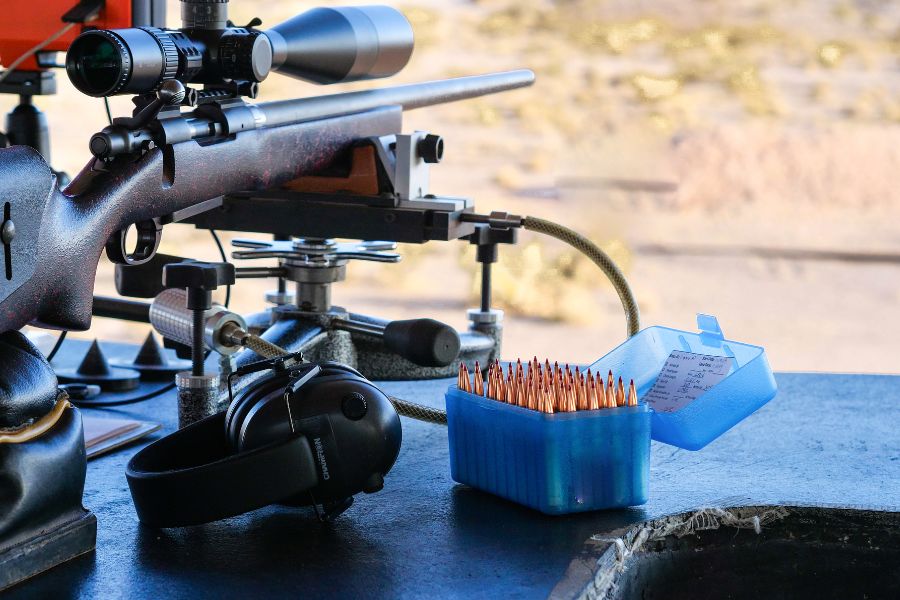
How to Reload 6.5 PRC to SAAMI Spec (Full-Length Sizing Explained)

Reloading 6.5 PRC is all about consistency. The cartridge is designed for high velocity, long-range precision, and tight tolerances, which means small deviations in sizing, headspace, or neck tension show up fast on target. Whether you’re loading for PRS, long-range steel, or precision hunting, full-length sizing to SAAMI spec is the foundation of safe pressure, reliable chambering, and repeatable accuracy.
In this guide, we’ll break down exactly how to reload 6.5 PRC to SAAMI spec, why full-length sizing matters more for this cartridge than many others, and how the right sizing die setup dramatically improves concentricity, brass life, and velocity consistency.
Why Full-Length Sizing Matters for 6.5 PRC
The 6.5 PRC operates at higher pressures and velocities than many traditional 6.5 cartridges. That means your brass experiences more case growth, shoulder movement, and springback during firing. If you rely on partial sizing or inconsistent shoulder bump, you’ll quickly see problems: stiff bolt lift, inconsistent chambering, pressure spikes, and erratic velocity spreads.
Full-length sizing brings the case back into SAAMI spec dimensions from the base through the shoulder and neck. This ensures your resized brass chambers smoothly every time, even as cases work-harden and change shape over multiple firings. Precision reloaders running multiple rifles or traveling between matches benefit even more, because properly sized brass reduces chamber fit variables across different rifles.
Using a true full-length sizing die designed for rifle cartridges is critical here. Generic dies that undersize at the base or inconsistently size the shoulder can cause feeding issues and excessive working of the brass. A purpose-built rifle sizing die from a precision-focused lineup like Mighty Armory's Rifle Sizing Die Collection ensures your brass is sized concentrically and to spec from the start.
Setting Shoulder Bump to SAAMI Spec (Without Overworking Brass)
One of the most overlooked steps in reloading 6.5 PRC is setting shoulder bump correctly. Too little bump and your bolt will feel tight or bind. Too much bump and you shorten brass life, increase headspace variation, and lose consistency in pressure and velocity.
For 6.5 PRC, a typical shoulder bump range of .001" to .003" is ideal for most bolt guns, while semi-auto platforms may benefit from slightly more. The key is not guessing. Use a comparator tool to measure fired brass, then adjust your sizing die incrementally until you achieve repeatable shoulder set-back within your target range.
This is where a precision sizing die shines. A full-length 6.5 PRC sizing die with fine-thread adjustment allows micro-changes in shoulder bump simply by turning the die body in or out of the press. Precision reloaders seeking repeatable shoulder control should use a dedicated 6.5 PRC Sizing Decapping Die that is machined to SAAMI spec and designed for consistent headspace adjustment across large batch sizes.
Neck Tension, Concentricity, and Why Mandrels Matter
Neck tension consistency is one of the biggest drivers of velocity SD and ES in precision rifle ammunition. Inconsistent neck tension leads to erratic bullet release, which shows up as vertical stringing at distance. Many standard sizing dies rely on fixed expander balls that pull back through the case neck, often inducing runout and uneven neck tension.
Using a sizing die that incorporates controlled neck expansion via mandrels dramatically improves concentricity. Mandrels expand the neck from the inside out, creating uniform neck tension without pulling the case off-center. This produces straighter ammo, more consistent bullet seating pressure, and tighter groups downrange.
For 6.5 PRC in particular, brass thickness varies widely by manufacturer. Being able to tune neck tension using mandrels matched to your brass eliminates guesswork and allows you to dial in seating feel and pressure curves. If your goal is repeatable accuracy, your die choice matters as much as your bullet and powder selection. Precision rifle reloaders should invest in sizing systems from high-quality options in the Mighty Armory Rifle Sizing Die Collection rather than generic mass-produced dies.
Decapping, Primer Pocket Prep, and Military Brass Considerations
Decapping is often treated as an afterthought, but inconsistent decapping can create downstream issues in priming, pocket prep, and even press function. Bent pins, stuck primers, and primer pullback can slow down your workflow and introduce variability into your process.
For 6.5 PRC reloaders using once-fired or mixed-source brass, especially military or crimped brass, a robust decapping system is critical. A sizing die with an integrated decapping system eliminates the need for separate steps while maintaining alignment and minimizing press stoppages. The Mighty Armory 6.5 PRC Sizing Die has a built in decapping system as well, complete with two decapping pins; one with .058" diameter for decapping brass with small flash holes and one .078" diameter for decapping standard size flash hol brass. You can also pair the sizing die with a dedicated decapping die from the Decapping Dies Collection, if you choose to build a high-efficiency workflow that keeps your press running smoothly even at higher volumes.
This becomes especially important when processing large batches of 6.5 PRC brass for match prep. Consistent decapping protects your primer pockets, prevents ringers, and reduces the chance of damaged case mouths during high-volume operations.
Complete 6.5 PRC Reloading Workflow (Precision-Focused Setup)
To reload 6.5 PRC to SAAMI spec with minimal runout and maximum consistency, your workflow should follow a precision-first sequence:
- Decap fired brass using a robust decapping die designed for rifle cases
- Full-length size to SAAMI spec using the Mighty Armory 6.5 PRC Sizing Decapping Die
- Verify shoulder bump with a comparator
- Expand necks using mandrels to establish uniform neck tension
- Trim and chamfer as needed
- Prime with consistent seating depth
- Charge and seat bullets with attention to COAL and concentricity
Every step builds on the one before it. If your sizing step is inconsistent, nothing downstream will fix it. That’s why investing in high-quality rifle sizing dies from Mighty Armory's Rifle Sizing Die Collection pays dividends in accuracy, reliability, and brass life.
Final Thoughts: Build Precision From the First Stroke
Reloading 6.5 PRC isn’t about shortcuts. The cartridge rewards attention to detail and punishes sloppy sizing and headspace control. Full-length sizing to SAAMI spec, precise shoulder bump adjustment, uniform neck tension, and concentric brass preparation form the foundation of accurate 6.5 PRC loads.
If you’re serious about long-range precision, start with the right tooling. Your die choice determines how consistent every round will be before powder, primers, and bullets even come into play. Precision starts at the die.
FAQs: Reloading 6.5 PRC to SAAMI Spec
Should I full-length size 6.5 PRC brass?
Yes. Full-length sizing keeps 6.5 PRC cases within SAAMI spec for reliable chambering, consistent headspace, and predictable pressure—especially for match ammo and brass that’s been fired multiple times.
How much shoulder bump should I use for 6.5 PRC?
A solid starting range is .001"–.005" for bolt-action rifles. Your ideal shoulder bump depends on your chamber, brass springback, and whether you’re prioritizing maximum brass life or maximum feeding reliability.
How do I measure shoulder bump accurately?
Use a headspace comparator. Measure a fired case, then size and re-measure. Adjust the sizing die in small increments until you achieve your target shoulder bump.
What does “SAAMI spec sizing” mean for 6.5 PRC?
SAAMI spec sizing means the die is designed to resize brass within standardized dimensional limits. For 6.5 PRC, this helps ensure smooth chambering, consistent bolt feel, stable pressures, and reliable extraction.
Why is my bolt hard to close after resizing 6.5 PRC?
Most commonly, the shoulder wasn’t bumped enough. It can also be caused by inconsistent lube, brass springback, or a sizing die that isn’t resizing the body/shoulder consistently. Verify shoulder bump with a comparator and adjust the die.
Do mandrels improve neck tension consistency for 6.5 PRC?
Yes. Mandrels expand the neck from the inside and typically produce more uniform neck tension than expander balls, which can pull the case off-axis. More consistent neck tension can improve seating feel and reduce velocity spread.
What causes runout when sizing 6.5 PRC brass?
Runout is usually caused by misalignment in the press, inconsistent case lube, expander ball drag, or uneven sizing. A precision full-length sizing die, consistent lube application, and controlled neck expansion can help reduce it.
Can I size 6.5 PRC on a progressive press?
Yes, but consistency matters. Use uniform case lube coverage and verify shoulder bump frequently. Many precision reloaders still prefer single-stage or turret presses for sizing because the added feel helps maintain repeatability.
What lube should I use for 6.5 PRC sizing?
For single-stage or turret presses, a case sizing wax applied lightly by hand is common. For progressive presses, a lanolin-based spray lube is often preferred for speed and even coverage. Avoid over-lubing to prevent shoulder dents.
Why do primers pull back or cause jams during decapping?
Primer pullback and press jams often happen when a primer sticks to the pin or doesn’t eject cleanly. A decapping setup designed to flick primers clear and maintain consistent alignment can reduce ringers, chute jams, and downtime.


