
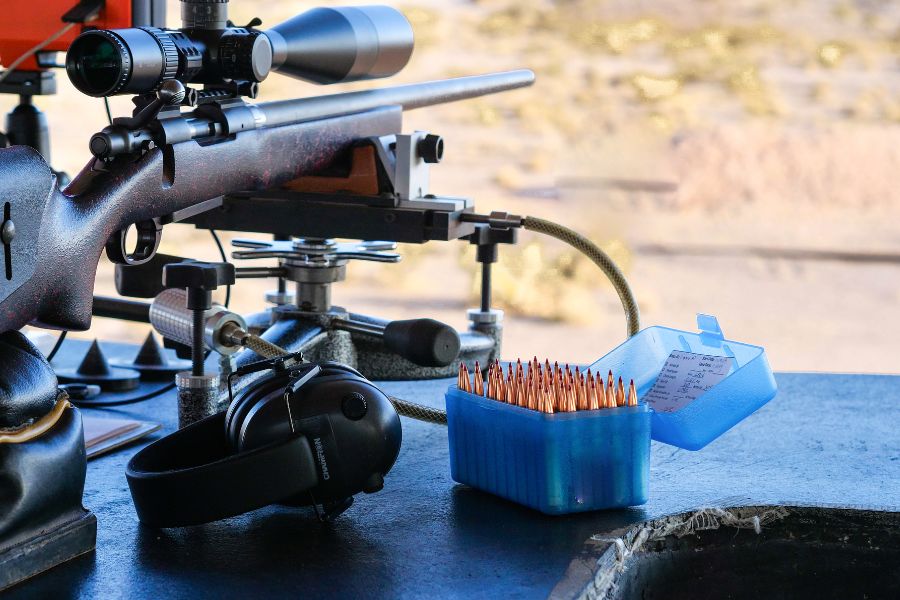
Neck Tension for 6.5 PRC: How Mandrels Reduce Runout and Improve Accuracy
Neck tension is one of the most powerful but least understood levers in precision rifle reloading. Two reloaders can use the same bullet, powder charge, and primer, yet see dramatically different velocity spreads and vertical dispersion on target. The difference often comes down to how consistently the bullet is released from the case neck. For a high-performance cartridge like 6.5 PRC, even small variations in neck tension can show up as pressure swings, inconsistent ignition, and vertical stringing at distance.
In this guide, we’ll take a deep dive into how to control neck tension for 6.5 PRC using mandrels, how to reduce runout throughout the sizing and expansion process, and how to build a repeatable workflow that supports true precision. We’ll also cover how die selection including choosing the correct neck diameter and mandrel combination affects consistency across different brass brands and firing cycles.
If you haven’t already dialed in your sizing process, start with our foundational guide on full-length sizing and SAAMI spec setup in How to Reload 6.5 PRC to SAAMI Spec (Full-Length Sizing Explained). Proper sizing is the foundation that makes neck tension tuning possible.
Why Neck Tension Matters for 6.5 PRC Accuracy
The 6.5 PRC operates at high pressures and velocities by design. This performance envelope magnifies small inconsistencies in case preparation. Neck tension directly influences how easily the bullet releases during ignition, which affects the initial pressure curve. Inconsistent release timing translates into velocity variation. At long range, that velocity variation becomes vertical dispersion.
Too much neck tension can:
- Spike initial pressure
- Deform bullet jackets during seating
- Increase seating force variability
- Reduce brass life due to excessive work-hardening
Too little neck tension can:
- Cause inconsistent ignition
- Increase the chance of bullet setback during feeding
- Lead to erratic ES/SD numbers
- Create unpredictable pressure behavior
Consistent neck tension improves bullet release timing, stabilizes the pressure curve, and tightens velocity spreads. But neck tension consistency doesn’t start with the mandrel, it starts with proper full-length sizing. Cases must be sized concentrically and within SAAMI spec before any meaningful neck tuning can happen. Precision dies from the Mighty Armory Rifle Sizing Die Collection ensures the case body and shoulder are aligned before you address the neck.
For 6.5 PRC reloaders, this is especially important because brass thickness and springback vary significantly between manufacturers and even between lots. Without a method to tune neck tension to your specific brass, you’re guessing, and guessing shows up on target.
Mandrel Shafts vs. Expander Balls (What Actually Reduces Runout)
Traditional expander balls have been around forever, but they come with a tradeoff: they pull back through the neck after sizing. That pulling force can drag the neck off-axis, especially if lubrication is uneven or if the press has any misalignment. Over time, this introduces runout that shows up as bullet tilt and inconsistent seating pressure.
Mandrel shafts work differently. Instead of pulling through the neck, a mandrel expands the neck from the inside in a straight, controlled motion. This reduces lateral forces and produces a more uniform internal diameter. For 6.5 PRC, where consistency matters at distance, mandrels offer a measurable advantage in reducing runout and stabilizing neck tension.
Using a caliber-specific mandrel shaft allows you to fine-tune neck tension to your brass thickness and according to springback. This is particularly valuable when switching brass brands or when brass begins to work-harden after multiple firings. Precision reloaders often keep multiple mandrel sizes on hand, such as when reloading 6.5 PRC. With the 6.5 PRC Sizing die, Mighty Armory includes four 6.5 PRC Mandrel Shafts with varying diameters in order to fine-tune seating feel and pressure curves as conditions change.
Choosing the Right Mandrel Die and Sizing Die Combination for 6.5 PRC
Mandrels need a stable, concentric housing to do their job correctly. A dedicated mandrel die ensures the mandrel enters the neck straight and expands uniformly around the circumference. This reduces eccentricity and produces repeatable neck ID from case to case. Mighty Armory mandrels offer three points of contact with the die body; on the free bore, the angle and the flat of the top. It is the first modular die in the reloading industry that ensure lockup with the die cap positioning. Multiple contact points secure the vertical concentricity of the mandrel when installed in the die.
For 6.5 PRC reloaders who want true precision over neck tension, this can be done with Mighty Armory's one-and-done sizing:
- Lock the mandrel shaft in place with the cap
- Size the full length of the die and the neck of the case with the mandrel shaft locked in place
- Turn the die up or down to adjust shoulder bump
A purpose-built Mighty Armory 6.5 PRC Gold Match Sizing Die provides the rigidity and alignment needed to keep mandrel expansion concentric.
Die selection also matters at the sizing stage. Mighty Armory offers two 6.5 PRC sizing die neck diameters .290" and .291" so reloaders can choose the option that best matches their brass thickness and desired neck tension strategy. Thicker brass or tighter neck tension goals may benefit from one diameter, while thinner brass or lighter tension preferences may benefit from the other. This choice helps prevent overworking the neck while still allowing precise control via mandrels.
To further accommodate varying brass thickness and springback, Mighty Armory sizing dies ship with four drop-in mandrels. This gives you the flexibility to fine-tune neck tension across different brass brands, firing counts, and use cases without buying additional components. It’s a practical way to adapt your setup as brass evolves over time, rather than forcing one fixed dimension to work for every scenario.
Decapping Consistency: Protecting Neck Alignment Before Expansion
Decapping is often treated as a basic housekeeping step, but inconsistent decapping can introduce subtle alignment issues before sizing and expansion even begin. Bent pins, stuck primers, and primer pullback can slightly distort the case mouth or pull the case off-center in the shell holder. Over large batches, these small misalignments compound into runout and inconsistent neck tension.
The 6.5 PRC Die has a built-in decapping system. Just turn the included decapping pin into the end of the mandrel shaft with a touch of thread locker. The brass can be decapped, full sized and neck sized in one effortless step.
If reloaders processing 6.5 PRC brass choose to decap in a separate step on a single-stage or turret press, we recommend using a robust decapping solution like the Magnum Universal Decapping Die which keeps primers ejecting cleanly and cases aligned vertically during the decapping stroke. Mighty Armory decapping pins are reknowned for their strength and durability for tough primers, such as when decapping military crimped or boxer primed cases. the .078" diameter pin has over 1,000 lb bend rate. Prevent downtime from bent or broken pins with Mighty Armory decapping pins .
Common Neck Tension Mistakes That Hurt 6.5 PRC Performance
Even experienced reloaders fall into a few common traps when chasing consistency:
- Relying on expander balls: This often increases runout and introduces variability.
- Ignoring brass thickness differences: Different brands behave differently. One neck dimension won’t fit all.
- Overworking the neck: Excessive sizing and expansion cycles accelerate work-hardening and shorten brass life.
- Skipping shoulder bump verification: Neck tension consistency can’t compensate for inconsistent headspace.
- Changing multiple variables at once: Adjust one variable at a time so you can see what actually improves results.
Using sizing dies with selectable diameters (.290" or .291") and four different sized drop-in mandrels allows you to control these variables systematically rather than guessing.
Final Thoughts: Neck Tension Is a Hidden Accuracy Multiplier
If you’re already sizing to SAAMI spec and still chasing unexplained flyers or velocity swings, neck tension is the next variable to control. Mandrels provide a simple, repeatable way to reduce runout and create uniform bullet grip across your 6.5 PRC loads. When paired with correct die selection, including choosing the appropriate neck diameter and mandrel combination, neck tension tuning becomes a powerful accuracy multiplier.
Precision starts with straight brass. Control neck tension, protect alignment at every step, and build your workflow so each operation supports concentricity. The results show up where it matters: on target.
FAQs: Neck Tension & Mandrels for 6.5 PRC
What neck tension should I run for 6.5 PRC?
There isn’t one universal number, but many precision reloaders tune neck tension so bullets seat with smooth, repeatable resistance. Typical setups target light to moderate tension that produces consistent seating force and stable velocity SD. The exact amount depends on brass thickness, springback, and bullet jacket hardness.
How do I know if my neck tension is inconsistent?
Inconsistent neck tension often shows up as uneven seating pressure, unexplained velocity spread, vertical stringing at distance, or occasional flyers. If seating force varies noticeably from round to round, your neck tension likely isn’t uniform.
Should I size first and mandrel after, or the other way around?
Size first, mandrel after. Full-length sizing establishes the external dimensions and shoulder position. Mandrel expansion then fine-tunes the internal neck diameter to your target tension without pulling the case off-axis.
Do I need different mandrels for different brass brands?
Often, yes. Different brass brands and lots have different neck thickness and springback. Having multiple mandrel sizes lets you tune neck tension to each brass type instead of forcing one setting to work for everything.
How do I choose between .290" and .291" neck sizing dies for 6.5 PRC?
The best choice depends on your brass thickness and how much sizing you want to do before mandrel expansion. Thicker brass or tighter tension goals may benefit from one diameter, while thinner brass may benefit from the other. The goal is to size enough for concentricity without overworking the neck, then fine-tune tension with mandrels.
Why does brass springback change my neck tension over time?
As brass is fired and resized, it work-hardens and springs back more after sizing. This changes the final neck ID even if your die setup doesn’t change. Adjusting mandrel size as brass ages helps keep neck tension consistent across multiple firings.
Can mandrels reduce bullet runout by themselves?
Mandrels help reduce runout by expanding the neck concentrically, but they work best when combined with straight sizing, consistent case lube, and a well-aligned press. Mandrels are part of a system—not a single-step fix.
How often should I anneal when tuning neck tension for 6.5 PRC?
Many precision reloaders anneal every 1–3 firings to stabilize brass hardness and springback. More consistent brass hardness makes neck tension more repeatable and reduces the need to constantly change mandrel sizes.
What’s the difference between neck tension and bullet seating force?
Neck tension refers to how tightly the neck grips the bullet after sizing and expansion. Seating force is what you feel when pushing the bullet into the case. They’re related, but seating force is also affected by neck chamfer, bullet coating, and case mouth condition.
Can inconsistent decapping affect neck tension?
Indirectly, yes. Bent pins or misaligned decapping can slightly distort the case mouth before sizing and expansion. Over time, that can contribute to runout and inconsistent neck tension. Clean, centered decapping helps preserve alignment early in the process.


